

From a Facebook Question to the Heart of the Church
I recently came across a Facebook post from someone preparing to move to Sioux Falls. They were searching for a church that teaches the Bible well and is active in the community. It was an honest question, and the responses came quickly—recommendations for churches known for strong preaching, weekly Bible studies, and engaging sermons. Yet the question itself reveals something deeper about modern Christianity and how easily faith becomes shaped by personal preference rather than submission to truth.
When many people say they want a “Bible-teaching church,” they usually mean a place where Scripture is clearly explained and practically applied, often centered on a single passage or theme each week. This model feels accessible and familiar. But it also carries an unspoken expectation: that the teaching must remain agreeable. When it no longer aligns with personal conviction, comfort, or interpretation, the solution is simple—find another church.
This mindset is not new. It appears vividly in John chapter 6.
After Jesus feeds the five thousand, the crowd follows Him because they want more—more signs, more bread, more healings, more of the extraordinary. Jesus knows this, and He names it directly. They are not seeking Him because they recognize who He is, but because they were filled. It is precisely for this reason that He refuses to keep feeding their appetite for wonders and instead offers something they did not ask for and do not want on their terms. He declares Himself to be the Bread of Life and insists that unless they eat His flesh and drink His blood, they have no life within them. This is not an invitation to marvel but a demand for trust. Jesus does not satisfy their desire for spectacle; He redirects them to a gift that requires faith rather than fascination. He contrasts the manna their ancestors received—bread that sustained for a day and then expired—with the bread He gives, which endures unto eternal life. The teaching offends them, and Scripture tells us plainly that many of His disciples turned back and no longer walked with Him.
What is striking is not that they left, but that Jesus let them. He did not revise the teaching. He did not apologize for it. He did not call them back and offer an alternative interpretation. He simply turned to the Twelve and asked, “Do you too want to leave?”
This moment exposes a fault line that runs straight through modern Christianity. When teaching becomes difficult, when doctrine challenges personal authority, the instinct is often the same as the crowd’s—walk away. Today, this usually looks more polite. People search for a church that “fits better,” one that teaches the Bible “the right way,” which often means the way that affirms what they already believe. In some cases, dissatisfaction does not lead to leaving Christianity altogether but to starting something new. A new congregation. A new interpretation. A new authority.
The assumption beneath all of this is that truth is validated by agreement. If a pastor teaches something uncomfortable, the listener becomes the judge. If a church holds firm to a doctrine that causes tension, the doctrine is treated as optional. This creates a Christianity that fractures endlessly, not because Scripture is unclear, but because submission has been replaced by preference.
Peter’s response in John 6 stands in stark contrast to the crowd. He does not say, “This makes sense to us,” or “We agree with everything you’ve said.” He does not pretend to understand what remains mysterious. Instead, he anchors himself to the Person standing before him. “Lord, you have the words of everlasting life. To whom shall we go?” In that moment, Peter recognizes that truth does not depend on his comprehension or comfort. It rests on the authority of Christ Himself. And Christ confirms Peter in this response. He does not correct him or ask for something more refined. He accepts it. This is the posture Jesus expects from His disciples—not mastery before obedience, not explanation before trust, but faith rooted in who He is.
That same authority is what the Catholic Church claims—not as an abstraction, but as a lived reality handed down through apostolic succession. The Church did not survive because her teachings were always easy to accept. She survived because she refused to abandon them. When heresies arose, the Church did not splinter in order to accommodate them. She did not revise doctrine to preserve unity at the cost of truth, nor did she retreat into ambiguity to avoid conflict. Instead, she defined doctrine precisely, clarified what had always been believed, and bore the consequences of fidelity. Councils were convened not to invent new teachings, but to defend the faith once delivered to the saints against distortion and reduction. This process often came with accusations that the Church was creating “man-made doctrines,” when in reality she was doing the harder work of safeguarding revealed truth against error. Fidelity was costly. It meant being misunderstood, resisted, and at times persecuted, yet the Church endured, choosing continuity over convenience and truth over accommodation.
The Eucharist stands at the center of this continuity. The Catholic Church does not merely teach about Jesus; she presents Him. The Mass is not structured around what is most appealing to the congregation but around what Christ commanded: “Do this in remembrance of me.” The same teaching that caused the crowd to leave in John 6 is the teaching the Church still proclaims, unchanged.
Beyond all of this, the question shifts. It is no longer which church has the best Bible study, the most engaging sermon, or the strongest men’s or women’s group as an end in itself. Those things matter, but they are secondary. The real question becomes which Catholic parish will best help me grow closer to Jesus Christ in the Eucharist. From there, everything else finds its proper place. Bible studies exist to draw us deeper into what we receive at the altar. Men’s and women’s groups exist to form disciples who live Eucharistic lives. Community outreach flows not from branding or programming, but from worship rightly ordered. When the Eucharist is the source and summit, the measure of a parish is not how well it entertains or explains, but how faithfully it leads souls to adore, receive, and conform themselves to Christ.
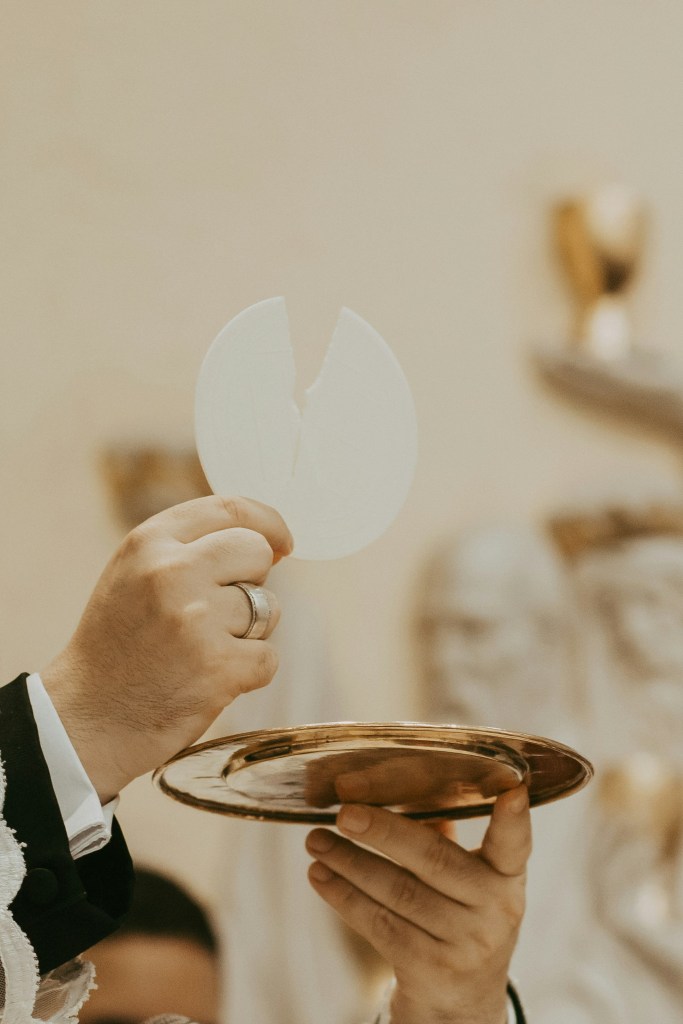
“The Church does not belong to us. We belong to her.”
This is why Catholics do not simply move on when doctrine becomes difficult. The Church does not belong to us. We belong to her. More accurately, we belong to Christ. And Christ does not renegotiate truth to retain followers.
So when I hear someone searching for a church that fits their expectations, I cannot help but think of the crowd that followed Jesus until He asked for everything. Faith that depends on agreement will always fracture. Faith that depends on Christ endures.
I want to belong to the Church that stayed when others left. The Church founded by Christ, taught by the apostles, and preserved through centuries of resistance, reform, and rejection. Not because she is comfortable, but because she is true.
Give me the Church that did not soften the teaching when the crowd walked away.
Give me the Church that still asks, “Do you too want to leave?”
And give me the grace to answer with Peter, “Lord, to whom shall we go?”

 Disciples At The Ready