

There is always a goal in front of us, and for most of our lives we assume that the problem is choosing the right one rather than questioning the entire pattern of choosing itself. Only with time do we begin to see that each stage we once treated as ultimate eventually shrinks in our rearview mirror.
When I look back now, what stands out is how serious each goal felt while I was inside it, and how small it looks once I stepped beyond it. As a child, the goal was a toy. It occupied my imagination completely. I worked up the nerve to ask for it, convinced that owning it would bring a lasting sense of happiness. When it finally arrived, there was joy, even exhilaration, but it faded quietly and without drama. The object remained, but the fulfillment moved on. At the time, I didn’t call that disappointment. I simply learned to look for the next thing.
That pattern followed me into adolescence, where goals became louder and more public. Sports gave them weight. Making the team mattered. Being good mattered more. Winning mattered most. Titles, recognition, leadership, and finally the dream of making it to State all carried the promise that this was what the struggle was for. I trained, sacrificed, and pushed my body because the goal felt worthy of the cost. And yet, once that season ended, once school was over and life moved forward, I looked back and wondered why I had carried those goals so heavily. They had been real, but they were never permanent.
That realization does not make those goals meaningless. Those small victories mattered precisely because they demanded struggle. They built discipline. They formed resilience. They taught me how to endure discomfort without quitting. Fortitude grows in pursuit, not arrival. The mistake is assuming that because a goal helps form us, it is therefore meant to fulfill us. Formation and fulfillment are not the same thing.
Adulthood simply dresses the same pattern in more respectable clothing. The goals become professional. A higher-paying job. A title that signals progress. A nicer apartment, then a house. A newer truck, then a bigger one. Each achievement offers a brief sense of arrival before turning into responsibility. What once felt like a dream becomes a bill. You discover that the race was never about freedom. It was about sustaining the life you built while trying to prove that it was worth building.
I played that game. Many of us do. And almost everyone who plays it long enough experiences the same quiet unease. When you look back at the last stage you chased, you can’t help thinking how strange it was to strive so hard for something that now feels so limited. The problem is not that we strive. It is that we aim too low.
The Catholic faith names this problem clearly and without apology. The Catechism begins not with rules or obligations, but with desire. “The desire for God is written in the human heart, because man is created by God and for God” (CCC 27). That line explains more about human restlessness than most psychological theories. We are not dissatisfied because we lack achievement. We are dissatisfied because nothing finite can satisfy a desire made for the infinite.
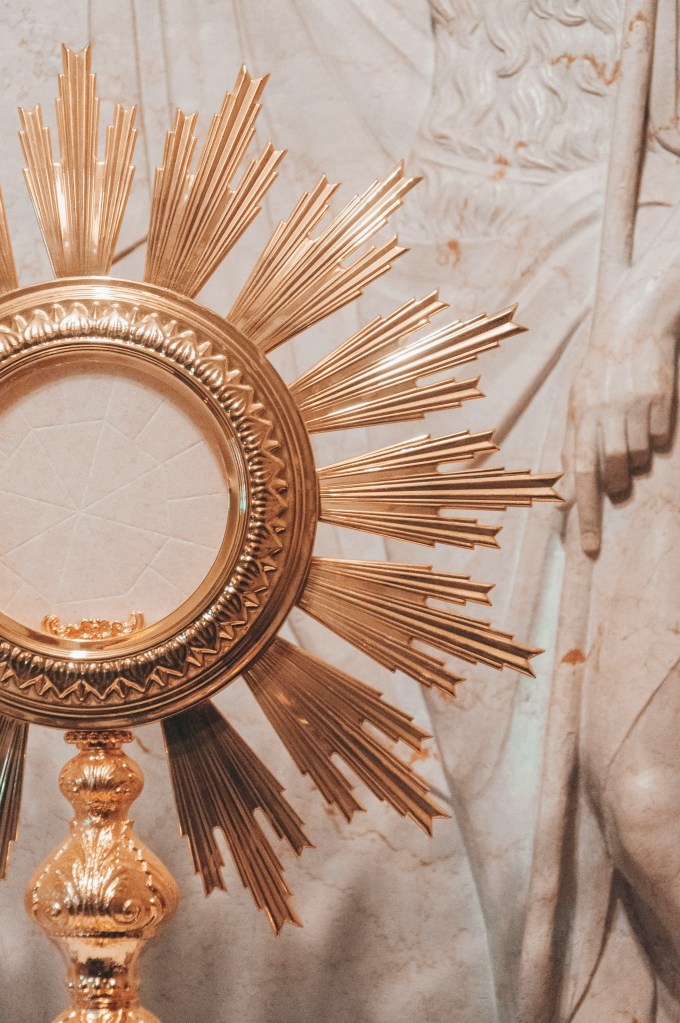
This is why every goal that is not God eventually feels small. We outgrow it because it was never meant to be our end. St. Augustine captures this reality with painful honesty when he writes, “You have made us for yourself, O Lord, and our hearts are restless until they rest in you.” Restlessness is not a flaw in our design. It is a signal pointing us toward our true destination.
The Church teaches that life is not an open-ended series of self-defined milestones. It has an ultimate end. Heaven is not simply another stage beyond career and retirement. It is not a reward we eventually reassess and move past. The Catechism describes Heaven as “the ultimate end and fulfillment of the deepest human longings, the state of supreme, definitive happiness” (CCC 1024). That word definitive matters. There is no next thing after Heaven. There is no later realization that the goal was misplaced. There is no looking back and smiling at how naïve it was to want it.
If you ever reach Heaven, you do not outgrow that goal.
You enter the Kingdom of God forever. Not success that fades. Not joy that requires replacement. True happiness. Communion with God. A fulfillment that does not expire with time or circumstance. St. Thomas Aquinas writes with striking clarity that “final and perfect happiness can consist in nothing else than the vision of the Divine Essence.” Everything else is partial. Everything else ends.
Seen through that lens, every earlier stage of striving finally makes sense. The goals of childhood, sport, and work were never meant to satisfy us. They were meant to strengthen us. God uses temporary goals to train eternal souls. The struggle teaches perseverance. The disappointment teaches detachment. The success teaches humility, if we let it. These things form us for a happiness that does not shrink when reached.
This is where the Church does not suppress ambition but purifies it. She orders it. When God is placed first, work becomes service rather than self-justification. Achievement becomes stewardship rather than identity. Possessions become tools rather than proof. The Catechism reminds us that “man’s faculties make him capable of knowing the existence of a personal God… but for man to be able to enter into a real intimacy with him, God willed to reveal himself” (CCC 35). Revelation gives direction to desire. Without it, we aim blindly.
Most people sense that something is off but cannot name it. They feel exhausted by goals that shrink with time. They keep chasing because stopping feels like failure, even when winning feels hollow. The Church offers something radically different. Not escape from effort, but meaning for it. Not a denial of success, but freedom from being owned by it.
When Heaven becomes the goal, life here falls into proper order. You still strive. You still work hard. You still pursue excellence. But you no longer demand that temporary things bear eternal weight. You stop measuring your life by what fades and begin measuring it by what endures.
Every other goal will one day look small in hindsight.
Heaven never will.
It is not a phase.
It is not a stepping stone.
It is home, where a comforting voice welcomes us saying “Well done, good and faithful servant.”

 Disciples At The Ready