Every Easter I am recalled back to a conversation I had with a friend about this exact topic. I asked her what Jesus Christ meant when He said, “It is finished” (John 19:30). Without hesitation, she said, “His salvific work is complete.” That’s the answer most people give. It sounds right. It feels complete. But I remember responding, “That can’t be the full picture… because He still had to rise from the dead.” She paused, then said, “Oh… I’m not sure.” That moment stuck with me because it reveals something deeper. Many people stop at the surface. They know Jesus died for their sins, and that is true. But they don’t always understand what He actually finished on the cross or how those words are tied into everything God had been doing for centuries. “It is finished” is not a statement that the story is over. It is a declaration that something very specific has been brought to completion, and unless you understand the foundation laid in the Old Testament, you miss the depth of it entirely.
In Exodus 12, God establishes the Passover, and the instructions are detailed and intentional. The lamb must be unblemished. It must be sacrificed. Its blood must be applied to the doorposts so that death passes over the household. But that still is not enough. God commands, “They shall eat the flesh that night” (Exodus 12:8). This is required participation in the covenant. When the angel of death passes through Egypt, every household that does not follow what God commanded suffers loss (Exodus 12:12–13, 29). The lamb could be killed. The blood could be present. But if the people did not eat, they were not entering into what God had established. The sacrifice and the meal belonged together. They could not be separated. This is where many people today misunderstand the cross. They acknowledge that Jesus is the Lamb, but they stop at the sacrifice and never consider what it means to participate in it the way God has always required.
By the time of Jesus, the Passover meal had developed into a structured celebration built around four cups tied to God’s promises in Exodus 6:6–7: the Cup of Sanctification, the Cup of Deliverance, the Cup of Redemption, and the Cup of Consummation. When you read the account of the Last Supper in Matthew 26:26–29, Jesus takes bread and wine and says, “This is my body… this is my blood of the covenant.” He is clearly establishing the new covenant within the framework of Passover. But then He says something that should stand out: “I shall not drink again of the fruit of the vine until the kingdom of God comes.” He stops the meal. He does not drink the final cup. The Passover is left incomplete, and that is not accidental.
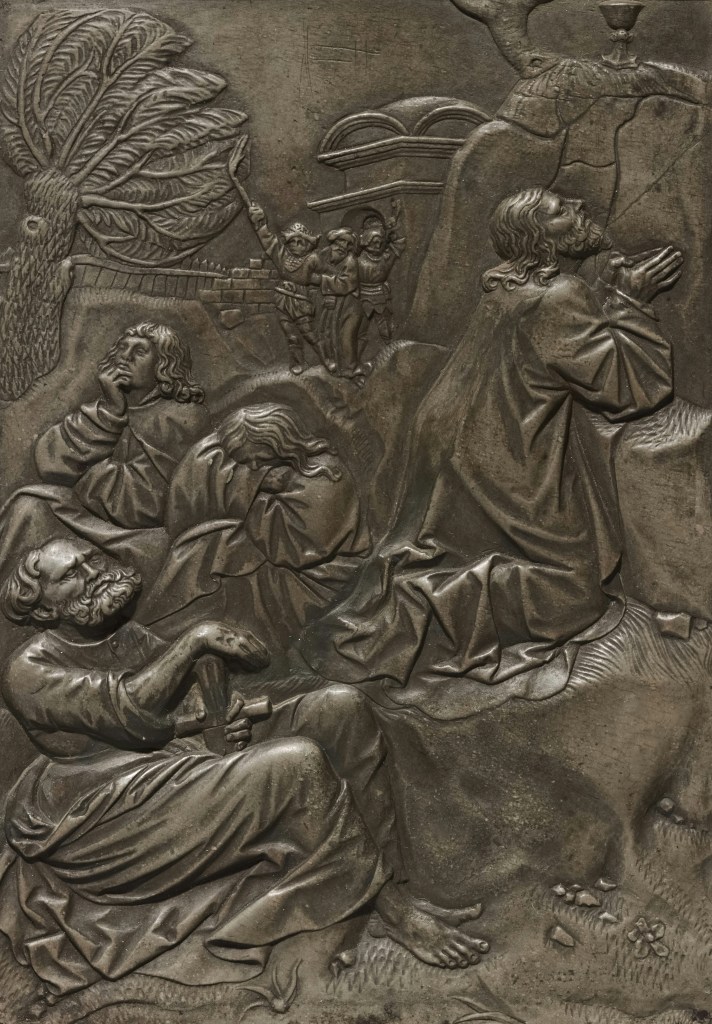
Then, in the Garden of Gethsemane, Jesus prays, “My Father, if it be possible, let this cup pass from me; nevertheless, not as I will, but as you will” (Matthew 26:39). That “cup” is not vague language about suffering. Within the Passover context, it is directly tied to what He has not yet completed. This is the cup that will bring everything to fulfillment. He knows what it represents. He knows that to drink it is to go to the cross and complete the covenant. That is why there is weight in that prayer. He is fully aware of what obedience requires, and He chooses it.
It is also critical to see that Jesus does not drink again after the Last Supper until He is on the cross. This is not because He wasn’t thirsty after being scourged and carrying that Cross up to Golgotha. It is because of what He said earlier. He is intentionally waiting. In John 19:29, He is offered sour wine on a hyssop branch, directly connecting the moment back to Exodus where hyssop was used to apply the blood of the lamb. When Jesus receives the wine, He then says, “It is finished.” That is the completion of the Passover. The fourth cup has been taken. The meal that began in the upper room is brought to its fulfillment on the cross. Thousands of years of covenant, sacrifice, and prophecy converge in that moment.
This is what Scott Hahn explains so clearly in his book ‘The Fourth Cup’. The Last Supper and the crucifixion are not separate events. They are one continuous act. Jesus is fulfilling the Passover in its entirety. Scripture reinforces this again and again. Paul writes, “Christ, our Passover lamb, has been sacrificed” (1 Corinthians 5:7). John the Baptist declares, “Behold, the Lamb of God” (John 1:29). John’s Gospel points out that not one of Jesus’ bones was broken (John 19:36), echoing Exodus 12:46. These are not coincidences. This is fulfillment.
The early Church understood this. St. Justin Martyr wrote that the Passover lamb prefigured Christ and that those who partake in Him are marked for salvation. St. Irenaeus of Lyons taught that Christ brings all of salvation history to completion in Himself. St. Cyril of Jerusalem instructed that what Christ offered is truly His body and blood, directly connecting the sacrifice to the meal. They did not separate what God had joined together. The sacrifice and the participation were always one reality.
And this is where the weight of it lands. In the first Passover, it was not enough that the lamb was sacrificed. It was not enough that the blood was shed. If you did not eat the lamb, you were not participating in the covenant, and the consequence was death. That is the structure God Himself established. When Jesus says in John 6:53, “Unless you eat the flesh of the Son of Man and drink His blood, you have no life in you,” He is not introducing something new. He is fulfilling what had always been there. He is showing that the pattern has not changed.
So when Jesus says, “It is finished,” He is declaring that the sacrifice is complete, that the Passover has been fulfilled, and that the covenant has been established. But He is not removing the call to participate. He is intensifying it. The Lamb has been offered. The cup has been consumed. The work has been completed. Now the question turns to you. Will you remain at a distance, acknowledging what happened, or will you step into the covenant the way God has always required?
And if you are Catholic, this should stop you in your tracks for a moment. Because the Passover did not disappear. It did not fade into history. It was fulfilled and made present in what we now call the Mass. This is not just a weekly obligation or a routine you grew up with. This is the continuation of the Passover. This is where the sacrifice and the meal are united. This is where the Lamb is not only remembered but given. So the challenge is simple but serious. Do not treat the Mass as something familiar or ordinary. Dive deeper into it. Learn it. Study it. Pay attention to what is actually happening. Because if the first Passover required the people to eat in order to live, then you should ask yourself what it means that you are invited into this one every single week.

 Disciples At The Ready