
Tears, Adoration, and a Calling
People are often surprised when I tell them I don’t enjoy debating anymore. That’s probably because for years I was known as “the Catholic guy” who was always reading theology, studying Church history, and digging into apologetics. The truth is, there was a season of my life when I thought every objection needed an answer and every challenge required a response. I spent countless hours learning how to defend the faith, and while I’m grateful for much of what I learned during that journey, I’ve also come to realize that defending the faith and debating people are not always the same thing.
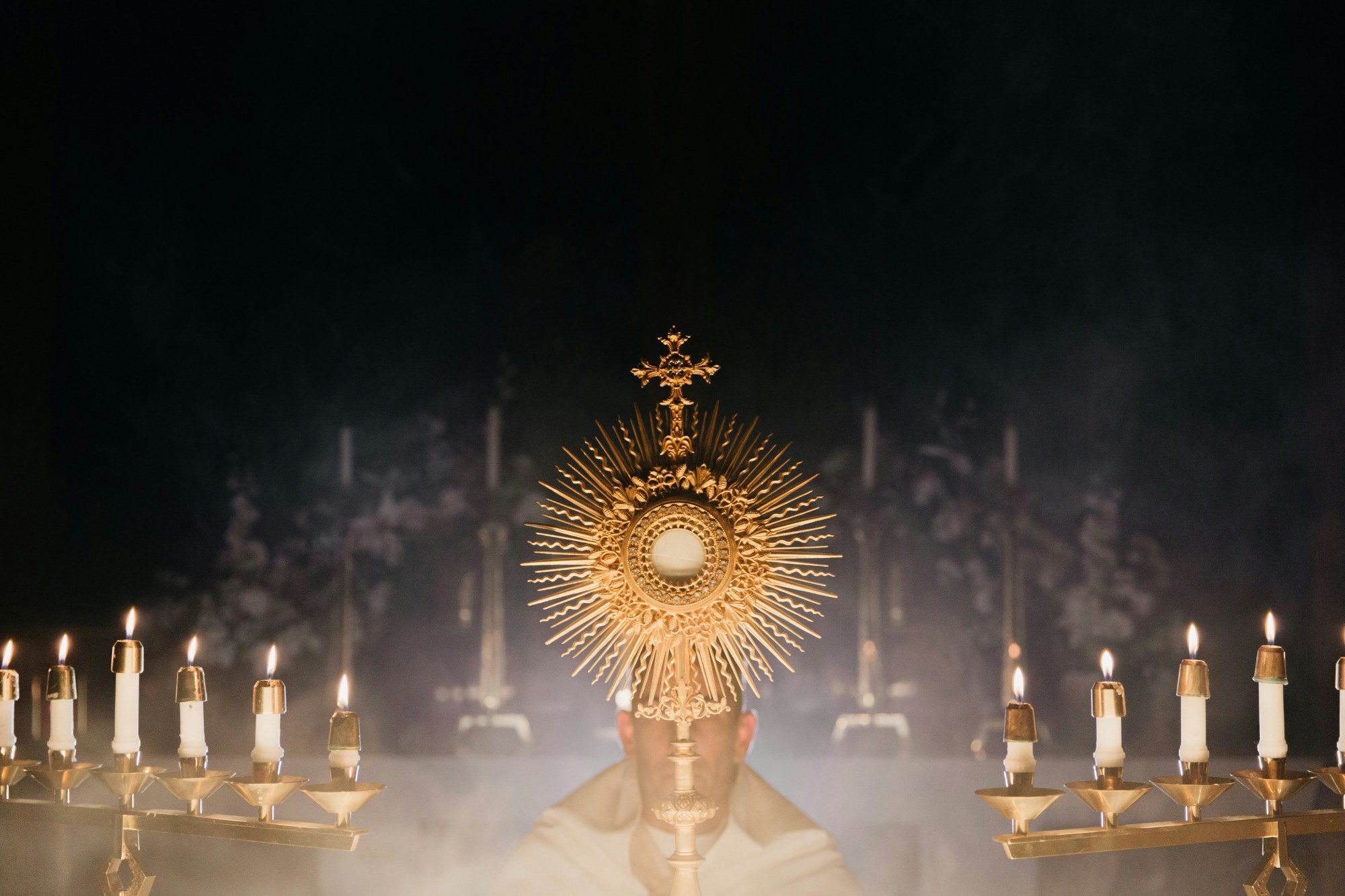
The interesting part is that I never set out to become interested in apologetics. In fact, my journey into apologetics began from a place of frustration, heartbreak, and confusion. For reasons we can get into another time, I found myself sitting in Eucharistic Adoration after yet another failed relationship. This wasn’t just any breakup. It was with a woman I genuinely believed I was going to marry. One of the major points of tension in the relationship was my refusal to leave the Catholic Church. Throughout my young adult years, God seemed to place incredible Protestant women in my life. They loved Scripture. They loved Jesus. They challenged me to grow in my faith. Yet the same question kept resurfacing: why are you Catholic? Why won’t you leave and join us? After another relationship ended, I found myself kneeling before the Blessed Sacrament with tears in my eyes. I remember praying, “God, do you want me to leave your Church? Is this why you keep putting these God-fearing Protestant women in my life?”
What happened next changed the course of my life. I can’t explain it any other way than to say I heard a voice. Not an audible voice that shook the room. Not some dramatic mystical experience. It was soft, but unmistakably clear. Gentle, yet firm. The words were simple: “Defend My Church.” At first I was caught off guard. Then almost immediately I understood what was being revealed to me. The problem wasn’t that God wanted me to leave the Catholic Church. The problem was that I couldn’t explain why I was staying. Every time someone challenged my faith, I became defensive or silent. Every time someone questioned the Church, I lacked the confidence and knowledge to respond. Looking back, I felt as though Christ was pointing back at me and asking why I didn’t have a reason for the hope that was within me.
That realization brought me directly to the words of St. Peter: “Always be prepared to make a defense to any one who calls you to account for the hope that is in you” (1 Peter 3:15). I had heard that verse before, but for the first time it felt personal. I realized I had spent years calling myself Catholic without really understanding why I was Catholic. I knew what the Church taught, but I often couldn’t explain why she taught it. I loved the Church, but I couldn’t defend her when challenged. I claimed Christ as my King, yet when His Bride was criticized, I often stood silently by. That night in Adoration marked the beginning of a journey that would consume thousands of hours of reading, studying, praying, listening, and wrestling with difficult questions.
The deeper I dug, the more convinced I became that the Catholic Church was exactly what she claimed to be. I found that the early Christians believed things that sounded remarkably Catholic. I discovered that many doctrines I had assumed were later inventions were actually present in the earliest centuries of Christianity. I learned that the Church existed before the New Testament was compiled. I found bishops exercising authority, Christians gathering around the Eucharist, prayers for the dead, devotion to Mary, apostolic succession, and a visible Church established by Christ Himself. Far from weakening my faith, every layer of study seemed to strengthen it.
For a long time, however, that passion slowly evolved into something else. I became focused on defending the Church in every conversation. Every objection felt like a challenge that needed to be answered. Every disagreement felt like a debate that needed to be won. I convinced myself that if I could just explain Catholicism clearly enough, people would become Catholic. If I had the right historical fact, the right Scripture verse, or the right Church Father quotation, surely the truth would become obvious.
Then reality humbled me.
I began walking away from conversations feeling disappointed. Not because I lacked answers, but because I wasn’t sure I was helping anyone encounter Christ. Sometimes I won the argument but lost the person. Sometimes I left feeling more concerned about proving a point than loving the individual in front of me. More than once I found myself driving home thinking, “That didn’t go as planned,” or, “I don’t think I brought them any closer to Jesus or His Church.”
What eventually changed my perspective was realizing that conversion does not belong to me. St. Paul writes, “I planted, Apollos watered, but God gave the growth” (1 Corinthians 3:6). Those words became a source of tremendous peace. My responsibility is not to force conversion. My responsibility is not to close the sale. My responsibility is faithfulness. I am called to plant seeds. I am called to water. God alone gives growth.
The older I get, the more I appreciate that even Jesus experienced rejection. In John chapter six, after teaching about the necessity of eating His flesh and drinking His blood, many disciples walked away. They did not misunderstand Him. They understood exactly what He was saying and rejected it. Yet Jesus did not chase after them. He did not soften His teaching. He simply turned to the Twelve and asked, “Will you also go away?” (John 6:67). Truth had been presented perfectly, and many still rejected it. If people walked away from Christ Himself, perhaps I should stop measuring success by whether people agree with me.
Today, I still love apologetics. I still study Church history. I still enjoy discussing theology. If someone wants to know why I’m Catholic, I’ll happily spend hours talking about Scripture, the Church Fathers, the Eucharist, apostolic succession, Sacred Tradition, and the authority Christ gave His Church. But my goal is no longer to win. My goal is witness. The Catechism teaches that “faith is a gift of God” (CCC 153). If faith is a gift, then my role is simply to help remove obstacles and point people toward Christ. God will take care of the rest.
Looking back, I now see that the command I received in Adoration was never really about winning debates. It was about faithfulness. It was about knowing my faith deeply enough to stand firm when challenged. It was about loving Christ enough to defend His Bride. It was about becoming the kind of Catholic whose life gives credibility to the truths he proclaims. Anyone can memorize arguments. Anyone can quote councils and Church Fathers. The harder task is becoming a saint.
These days, I don’t care nearly as much about winning arguments as I once did. What I care about is whether people can see Christ through me. I want them to walk away from our conversation knowing why I love the Catholic Church, not because I trapped them in a debate, but because they encountered someone who genuinely believes that Christ meant what He said when He promised that the gates of hell would never prevail against His Church. If they want to continue the conversation, I’m happy to keep talking. If they don’t, I’ll trust God with the outcome. After all, He was working on their heart long before I arrived, and He’ll still be working long after the conversation ends.


