I do not really wonder why my mother has never become Catholic. I know one of the major reasons. What I have wondered about, especially since becoming Catholic myself in 2011, is how someone like my mother could in so many ways make a great Catholic and yet see Catholicism as something fundamentally incompatible with who she is. The older I get, the more I think about how differently St. Paul approached people whose religious practices he did not share. Acts 17 tells us that Paul was deeply distressed when he saw that Athens was full of idols, so there is no sense in which he was simply affirming pagan religion as good. Yet when he stood before the Athenians at the Areopagus, surrounded by pagan altars and objects of worship, he did not begin by telling them that everything they had inherited was worthless. He began by saying, “I see that in every way you are very religious” (Acts 17:22). He noticed the religious instinct first. He found an altar “to an unknown god” and used it as the beginning of the Gospel proclamation: “What therefore you worship as unknown, this I proclaim to you” (Acts 17:23). Paul did not approve of their errors. By the end of the speech he was correcting their false ideas about God, calling them to repentance and proclaiming the resurrection. But he understood something Christians sometimes forget: evangelization does not always begin by destroying every religious instinct already present in a people. Sometimes it begins by recognizing what they are reaching for, distinguishing what is true from what is false, and showing them its fulfillment in Jesus Christ.
That passage has become one of the clearest ways for me to understand what went wrong in the way Christianity was presented to my mother. I came from a Vietnamese Buddhist family, and it would be easy to assume that Buddhism itself was the great obstacle between her and Christianity. But that misses something much deeper. My mother had been given a picture of Christianity in which following Christ meant turning away from practices she understood as part of being a faithful Vietnamese daughter, especially the duty to honor her parents and ancestors. Instead of someone saying, as Paul essentially did, “I see what you are reaching for here; now let me show you where it is fulfilled and where it must be corrected,” the message became much closer to: this is pagan, this is idolatry, this must stop. Somewhere along the way, Christianity was presented to her as requiring a choice that should never have been presented so crudely: Jesus or your ancestors, Christianity or your family, the God of the Christians or the people who gave you life.
I felt the force of that misunderstanding personally when I was twenty-one and first seriously attempted to become Christian. My mother threatened to disown me. At twenty-one I could not understand it. I knew I was not trying to reject her, my family or being Vietnamese. I thought I was trying to follow God. Her reaction felt extreme, and I still do not agree with it, but I understand it far better now. From her perspective I was not simply changing my beliefs about God; I was moving toward a religion she believed would eventually require me to reject practices tied to her parents, grandparents and ancestors, and therefore to reject part of what she understood it meant to be her son. When that is the Christianity a Vietnamese mother thinks her son is embracing, and the Christianity she thinks she herself would have to embrace, her resistance makes much more sense to me now than it did when I was twenty-one. What I have wondered ever since is how different things might have been if she had encountered the Catholic understanding of worship, veneration, filial piety, prayer for the dead and the communion of saints instead.
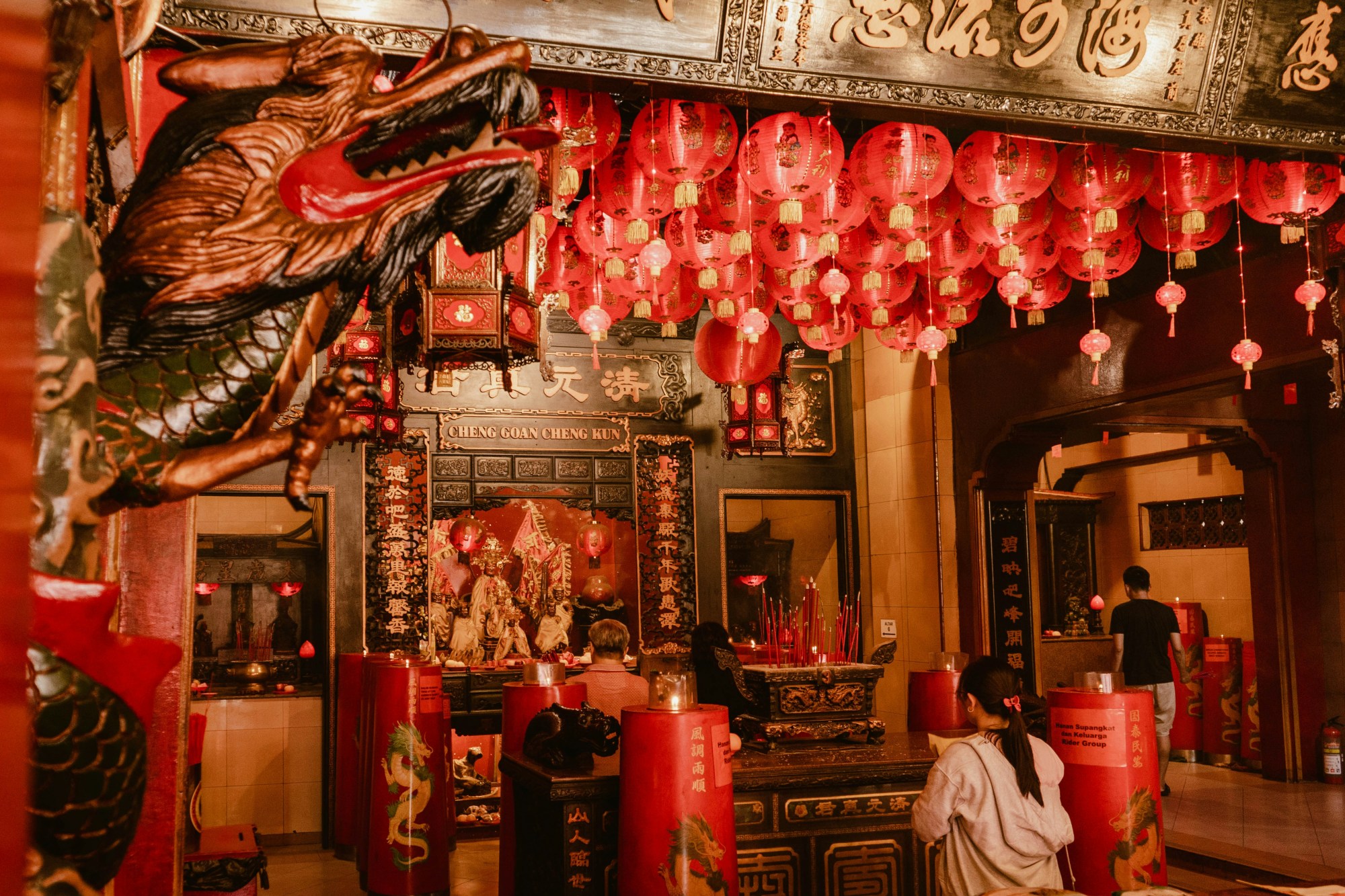
You have to understand something about Vietnamese culture before you can understand the problem. Honoring your ancestors is not some strange religious hobby that Vietnamese people happen to practice. It reaches into the deepest Vietnamese understanding of family, gratitude, obligation and identity. The people who came before you matter because their sacrifices are part of the reason you are here. Parents matter. Grandparents matter. The dead are remembered. Their photographs remain in the home. Incense is burned. Food may be placed before an ancestral altar. Families gather on death anniversaries. Graves are visited and maintained. Children bow. Names are remembered. At Tết, remembrance of parents, grandparents and generations past is woven into the life of the family. This remains so widespread that a 2024 Pew Research Center survey found that 96 percent of Vietnamese adults had burned incense to honor ancestors during the previous year, while 90 percent had offered flowers or lit candles. Even among Vietnamese Christians, 86 percent reported burning incense and 81 percent offering flowers or lighting candles in honor of ancestors. This is not some fringe custom that disappears the moment a Vietnamese person becomes Christian. It is tied to the Vietnamese understanding of what a son or daughter owes to those who came before.
The instinct behind much of this is older and deeper than the question of whether a Vietnamese person identifies as Buddhist. One of the most striking Buddhist texts for understanding it is the Sigalovada Sutta. A young man named Sigala is performing a ritual because his dying father told him to do it. The Buddha does not tell him that honoring his father’s command is foolish. Instead, he gives the ritual a moral meaning. Parents represent the eastern direction because they are the beginning from which the child comes, and the child therefore owes duties to them. Among those duties are supporting the parents who supported him, carrying out his responsibilities toward them, preserving the family tradition, living worthily of his inheritance and making offerings in honor of departed relatives. One translation renders the last duty as offering “alms in honor of my departed relatives.” Whatever theological disagreements Christianity has with Buddhism, stop for a moment and understand what an idea like that forms in the imagination of a culture. Gratitude does not expire at the grave. Death does not suddenly make your parents irrelevant. Remembering those who gave you life is part of being a good son or daughter.
Then Christianity arrives, and too often the message Vietnamese families received was essentially that all of this was pagan. Do not bow, do not burn incense, take down the altar, do not pray for the dead, do not ask the saints for their intercession, and do not participate in rites connected with deceased relatives. These things are ancestor worship, and Scripture says, “You shall have no other gods before me.” There is an important truth inside that objection that Catholics should affirm without hesitation: God alone is God, and the worship owed to him cannot be given to an ancestor, a saint, an angel or anything else in creation. If an ancestor is treated as a god, Christianity must reject it. If divine power is attributed to an ancestor, Christianity must reject it. If superstition, divination or fear of spirits enters the practice, Christianity has something to purify. The problem is not the insistence that God alone be worshiped. The problem comes when every form of honor, reverence or bodily gesture is collapsed into worship. Once that distinction disappears, a Vietnamese person bowing before the photograph of a deceased parent can look no different from a pagan bowing before a god, regardless of what the person actually intends by the act.
Catholic theology has categories that keep us from making that mistake. The Church distinguishes adoration, the worship due to God alone, from the honor that may rightly be shown to human beings and, in a particular way, the veneration given to the saints. That distinction is not a loophole invented so Catholics can sneak idolatry through the back door. Human beings make these distinctions constantly. We stand when a judge enters a courtroom without worshiping the judge. We kneel before someone to receive a blessing without believing that person is God. We kiss a photograph of someone we love without worshiping paper. Catholics kiss crucifixes without worshiping wood, place flowers at graves, light candles for the dead, kneel beside coffins and pray, and bow before altars while knowing that the meaning of an external gesture depends on its object and intention. A bow can be worship, but a bow can also be respect. Incense can be offered in pagan worship, but incense also belongs to biblical worship; Revelation itself describes heavenly worship with golden bowls of incense that are “the prayers of the saints” (Revelation 5:8). The physical action alone does not tell you everything that is happening in the heart.
The Bible’s command to honor our parents is also much stronger than Christians sometimes remember. “Honor your father and your mother” is part of the Ten Commandments (Exodus 20:12), and Christ repeats it in Matthew 19:19. Jesus was so serious about that obligation that he condemned people who used a religious excuse to avoid providing for their father or mother (Matthew 15:3-6). Paul tells children and grandchildren to “make some return to their parents,” because this is pleasing before God (1 Timothy 5:4). Sirach tells the child, “With all your heart honor your father, and do not forget the birth pangs of your mother” (Sirach 7:27). None of those commandments comes with an expiration date attached to a death certificate. Christianity does not teach that love suddenly becomes indifference when someone dies. Quite the opposite. Scripture gives us Judas Maccabeus making atonement for the dead and calls prayer for them “a holy and pious thought” (2 Maccabees 12:45). Paul tells us that neither “death, nor life” can separate us from the love of God in Christ (Romans 8:38-39). Jesus says that God “is not God of the dead, but of the living, for all live to him” (Luke 20:38). The Catholic vision of the family of God stretches straight through the grave.
That is where I think Catholicism could have spoken to my mother in a language she already understood. The Church in Vietnam has had to wrestle with exactly this question for generations: how do you preach Jesus Christ without first demanding that Vietnamese converts destroy every natural expression of filial piety? The answer is not to declare every ancestral practice Christian. It is to distinguish worship and superstition from honor, remembrance and filial duty. Instead of telling my mother, “You must stop honoring your ancestors if you want to follow Jesus,” the Catholic could say, “Let me show you what Christ reveals about the good thing you are already trying to do.” Your parents gave you earthly life, and God commands you to honor them. You remember your dead, and Catholics remember and pray for ours. You believe that death does not make the bonds of family meaningless, and Christianity goes further by proclaiming the resurrection of the dead and the communion of saints. The Vietnamese instinct of filial piety does not have to be destroyed before the Gospel can enter. It has to be ordered toward the truth revealed in Christ.
Paul’s speech at the Areopagus gives the pattern. He was troubled by idolatry, but he did not confuse correction with cultural annihilation. He recognized the search for God, identified what could serve as a bridge, proclaimed the truth, and then called for repentance. That is what Catholic inculturation at its best does as well. It does not simply baptize every cultural or religious practice and declare it Christian. It cannot. If I believe my grandfather has become a god, Christianity says no. If I believe an ancestor possesses divine power independent of God, Christianity says no. If I offer an ancestor the worship due to God alone, Christianity says no. If superstition, divination or fear of spirits enters into the practice, Christianity has something to purify. But Christianity does not have to burn the entire cultural inheritance to the ground in order to preach Christ. It can recognize what is true and good, purify what is false, and bring the whole thing into right order under the lordship of Jesus Christ.
The Church’s handling of ancestral rites in Asia has not always been this clear, and the history is complicated, but the modern Vietnamese bishops have made these distinctions quite concretely. Ancestral altars, incense, candles and gestures such as bowing can be permitted when they express filial piety rather than superstition or divine worship. The altar honoring ancestors may exist in a Catholic home while remaining subordinate to the worship given to God, and Vietnamese Catholic life has developed a strong practice of remembering and praying for parents, grandparents and ancestors, especially around the Lunar New Year. That should tell us something. Vietnamese Catholics did not have to stop being Vietnamese to become Catholic.
And this is where I struggle with what Protestant ideology did to my family’s perception of Christianity. I am not saying every Protestant believes the same thing, and I am not saying Protestants hate Vietnamese culture. I am saying that the Protestant Christianity presented to my family lacked theological categories that might have made Christianity far more intelligible to my mother. Remove prayer for the dead. Remove the intercession of the saints. Reduce the communion of saints largely to fellowship among Christians presently living. Become suspicious of relics, incense, sacred images and physical expressions of religious honor. Most importantly for this question, lose the older Christian distinction between the worship due to God alone and forms of honor or veneration that are not worship. Then place that framework in front of a Vietnamese woman bowing before a photograph of her deceased parents and lighting incense in their memory. It becomes very easy to call the entire thing idolatry, because the theological vocabulary needed to make distinctions has already been discarded.
And then there is perhaps the most distinctly Catholic answer to all of this: the communion of saints. The Apostles’ Creed does not say that I believe merely in the fellowship of Christians presently walking around on earth. It says that I believe in “the communion of saints.” Christ has one Body, and Paul tells us, “So we, though many, are one body in Christ, and individually members one of another” (Romans 12:5). Physical death does not amputate those who die in Christ from his Body. This is why Catholics pray for the dead, invoke the saints, preserve relics, celebrate the anniversaries of saints’ deaths, visit cemeteries, offer Masses for deceased relatives, and maintain a real sense that the Church includes those who have gone before us. The Catholic response to the Vietnamese intuition that death does not erase the bonds between generations is therefore not simply to dismiss the whole thing as pagan superstition. Catholicism can say that the instinct contains something true while still correcting whatever is incompatible with Christian revelation. Death does not end communion, but Christ reveals what that communion truly is.
My mother came from a culture in which honoring her parents and ancestors was woven into what it meant to be a good daughter. Then imagine asking her to accept a Christianity that appeared to say that becoming a good Christian required becoming a bad Vietnamese daughter. Why would she convert? More personally, imagine what she thought was happening when her twenty-one-year-old son announced that he wanted to become Christian. I thought I was moving toward God. She may have thought I was beginning a journey that would eventually teach me to look at the practices of my own family with contempt. I did not understand that fear then. I understand it now. I still think the threat to disown me was wrong, but I can finally see the Christianity she thought she was protecting our family from.
And what troubles me most is realizing that Catholicism never required that choice. “Honor your father and your mother” is not a Buddhist command that Christianity must reluctantly tolerate. It is the command of God himself. The Sigalovada Sutta teaches a son to support his parents, preserve the family tradition and remember departed relatives. Christianity does not need to mock that instinct in order to preach Christ. It can recognize the natural virtue contained within filial piety and then take it somewhere Buddhism cannot: into the revelation of Jesus Christ, the resurrection of the body and the communion of saints. The Gospel does not tell my mother that her desire to remain connected to those who came before her is foolish. It tells her that death itself has been conquered. Jesus stood before the tomb of Lazarus and said, “I am the resurrection and the life; he who believes in me, though he die, yet shall he live” (John 11:25). That is the Christianity I wish my family had encountered more clearly. The choice was never supposed to be Jesus or your ancestors, Christianity or your Vietnamese identity, fidelity to God or honor for your parents. Christ does not ask us to dishonor our fathers in order to call God our Father.
This is also where the issue becomes much more than an apologetics argument for me. I have wanted a unified relationship with my mother in the faith for years, and I think often of St. Monica and St. Augustine. Monica spent years praying and weeping for Augustine’s conversion, and eventually the faith she loved became something mother and son shared. Near the end of her life, their conversation at Ostia gives us one of the most beautiful pictures of spiritual unity between a mother and son in the Christian tradition. There is something about that relationship I have long wanted with my own mother, except in my case the roles feel reversed. I am the Catholic son praying for my mother. I want to kneel beside her at Mass. I want us to pray for our deceased family together. I want her to understand why I ask the saints for their prayers, why I believe the Eucharist is truly Christ, and why becoming Catholic did not make me less her son or less grateful for the people through whom God gave me life. I want the faith that once looked to her like something that might take her son away to become the very thing that unites us most deeply.
I cannot say that my mother would have become Catholic had Christianity first been presented to her this way. Faith is a gift, and conversion belongs ultimately to God. What I can say is that I see qualities in her that make me think she could make a great Catholic, which is precisely why this bothers me. Her reverence for family, her sense of obligation, her gratitude toward those who came before her and her conviction that the dead should not simply be forgotten did not have to be obstacles to the Gospel. They could have been points of contact, much as Paul found a point of contact among the Athenians. They still would have needed correction and purification wherever they conflicted with revelation, but Christianity did not need to demand that she become culturally orphaned before she could become a daughter of the Church.
What feels tragic to me is that the Christianity my mother learned to fear was not the Christianity I eventually discovered in Catholicism. When I finally discovered Catholicism, I found a Christianity in which I did not have to forget my ancestors in order to worship their Creator. I could honor them without worshiping them, remember them without making gods of them, pray for them without pretending to know their eternal fate, and bring their names before the altar of God. Instead of acting as though death had made them irrelevant, I could entrust them to the mercy of the God whom Christ described with the astonishing words, “He is not God of the dead, but of the living, for all live to him” (Luke 20:38). I cannot force faith into my mother any more than Monica could force it into Augustine. I can pray, live the faith in front of her, answer misunderstandings when the opportunity comes and entrust her to God. I still pray that the faith which once looked to my mother like something that might take her son away will someday become the very thing that unites us most deeply. That is the St. Monica and St. Augustine ending I long for—not the satisfaction of winning an argument, but a mother and son finally looking in the same direction, toward Christ.


